Introduction
Tissue processors convert fresh specimens into paraffin-embedded blocks ready for sectioning — a step that determines whether your lab delivers consistent sections or faces rework and delays. The right processor protects staff from reagent exposure, keeps workflows predictable, and ensures uniform infiltration across specimens.
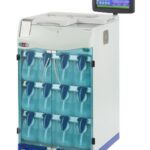
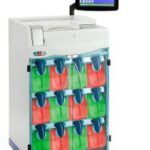
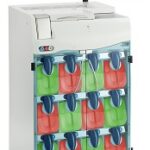
ISTOS Medical's processing portfolio includes six models — TP 300, FTP 300, ETP 300, EFTP 300, ETP Plus and EFTP Plus — each tuned to different volumes, turnaround targets and safety expectations. This post helps you match each model to your lab's workload, space and staffing profile.
Why tissue processing shapes your entire lab workflow
Processing defines outcomes: under-penetrated blocks, inconsistent staining and extra microtomy work often trace back to the processing stage. Choosing an appropriate processor reduces rejects, standardizes performance and improves downstream efficiency.
A well-selected processor delivers:
- Consistent dehydration, clearing and infiltration cycles that protect tissue architecture.
- Reduced staff exposure to vapours through sealed systems and proper exhaust integration.
- Repeatable protocols that are easy to validate and audit.
- Reliable overnight and fast‑track cycles that align with caseload peaks.
ISTOS Processing Portfolio at a glance
Six models grouped into three families:
- Standard Processors: TP 300 (compact entry) and ETP 300 (higher capacity)
- Fast Track Processors: FTP 300 (same‑day biopsies) and EFTP 300 (high‑volume fast track)
- Plus‑Series: ETP Plus (advanced programming) and EFTP Plus (flagship high‑throughput)
Choosing the right model for your workload
How the models typically map to lab scenarios:
- TP 300 — small surgical or teaching labs, satellite sites needing a straightforward, reliable unit.
- ETP 300 — medium hospitals and diagnostic centres with moderate daily cassette counts.
- FTP 300 — outpatient and on‑call services prioritizing same‑day blocks for biopsies.
- EFTP 300 — high‑volume diagnostic labs where speed and throughput both matter.
- ETP Plus — labs needing advanced programming, logging and remote monitoring options.
- EFTP Plus — multi‑site groups and 24/7 operations requiring audit‑ready reporting and networking.
Key features across ISTOS processors
Common design priorities across the six models:
- Closed‑vessel processing to minimise operator exposure.
- Touch‑friendly interfaces with program storage and recall.
- Flexible cassette handling to suit different specimen mixes.
- Built‑in programs with customisation and validation support.
- Safety interlocks, leak detection and level alarms.
- Compact footprints and quiet operation for constrained labs.
Fast‑track vs standard processing
Standard processors prioritise tissue quality for larger or complex specimens; fast‑track processors shorten cycle times for biopsies without sacrificing morphology. Many labs adopt a hybrid approach: one standard unit plus a fast‑track for urgent work.
Scalability and service considerations
- Reagent efficiency — look for models with sensible reagent-changes and minimized waste.
- Maintainability — modular access panels and clear service points reduce downtime.
- Upgrade path — software and hardware options that support future needs save CAPEX later.
- Local support — installation, validation and operator training are critical to success.
Common pitfalls when specifying processors
- Undersizing for peak demand — plan for busiest days, not averages.
- Ignoring reagent logistics — storage, refill workflows and waste handling matter.
- Skipping protocol validation — run real workloads before going live.
- Underinvesting in training — automated doesn't mean maintenance‑free.
ISTOS processing families at a glance
Which processor fits your lab?
Design priorities across the ISTOS processor range
Conclusion
ISTOS tissue processors — from TP 300 through EFTP Plus — offer a clear upgrade path from entry models to high‑throughput, audit‑ready systems. Define your throughput, turnaround targets and growth plan first; the right processor becomes obvious after that.
Contact ISTOS Medical at +91 80 2686 0607 or +91 99001 98668, or email talktous@istos.in for specifications and on‑site evaluation.