Introduction
Microtomy is the stage where paraffin blocks become usable diagnostic sections. The quality of this step directly affects ribboning, section integrity, staining consistency and the time your lab spends correcting avoidable errors.
ISTOS Microtomy Solutions are designed to support consistent sectioning across routine histopathology workflows, with models that suit different workloads, precision needs and lab environments. This post helps you understand where each of the three microtome models fits best.
Why microtomy quality matters
Even perfectly processed tissue can still produce poor slides if sectioning is inconsistent. Blade stability, feed accuracy and operator comfort all influence the final result, especially when the workload is high or specimen types vary widely.
A dependable microtome helps you achieve:
- Consistent section thickness across every block.
- Smooth ribbon formation with fewer compression artifacts.
- Reduced repeat work and fewer wasted blocks.
- Better throughput during peak case volumes.
ISTOS Microtomy portfolio at a glance
Three models grouped by performance and workflow needs:
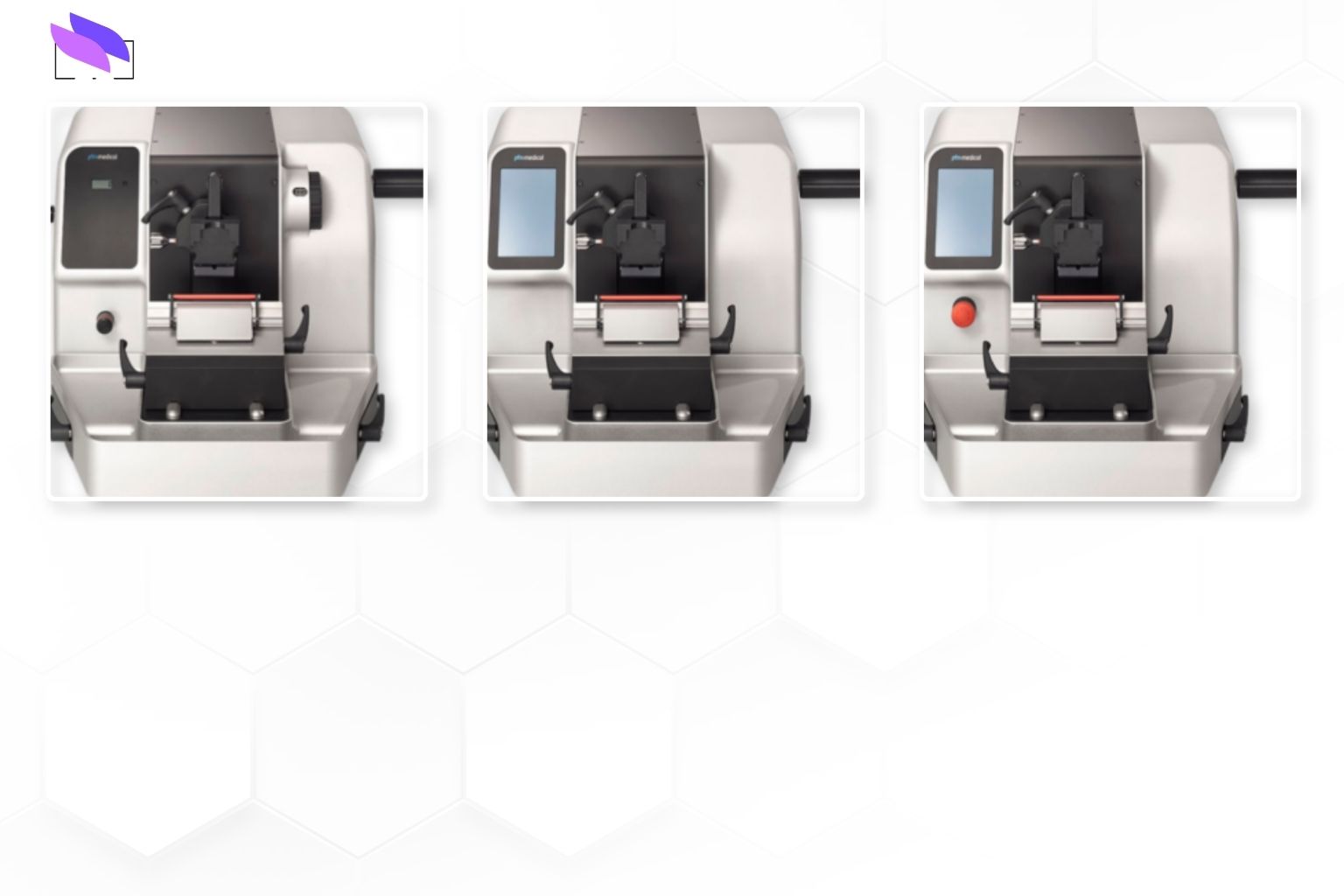
- PFM 3004 M - Manual Rotary Microtome: Entry-level microtome for routine sectioning and dependable daily use.
- PFM 3005 E - Semi Automated Rotary Microtome: Mid-range microtome for higher precision and heavier workloads.
- PFM 3006 EM Fully Automated Rotary Microtome: Advanced microtome for demanding labs, improved control and premium sectioning performance.
Choosing the right model for your workflow
How the models typically map to lab scenarios:
- PFM 3004 M - Manual Rotary Microtome — small labs, teaching facilities and satellite sites needing a reliable routine microtome.
- PFM 3005 E - Semi Automated Rotary Microtome — medium-volume pathology labs that need greater consistency and operator comfort.
- PFM 3006 EM Fully Automated Rotary Microtome — high-throughput or specialized labs requiring superior precision and workflow efficiency.
Key features across ISTOS microtomes
Common priorities across the range:
- Stable sectioning for accurate and repeatable results.
- Ergonomic controls that reduce fatigue during long sessions.
- Smooth advance and reliable specimen handling.
- Support for a variety of tissue types and block sizes.
- Safety-focused design with easy cleaning and maintenance.
- Compact footprint for modern histopathology workspaces.
Manual vs advanced sectioning
Some labs prefer a straightforward manual setup for routine work, while others need enhanced control for demanding samples and higher throughput. The right choice depends on whether your priority is simplicity, precision or a balance of both.
Scalability and service considerations
- Blade compatibility — check support for your preferred blade type and holder setup.
- Maintainability — easy servicing helps reduce downtime and keeps sectioning consistent.
- Upgrade path — choose a model that can support your future caseload growth.
- Local support — installation, training and after-sales service matter as much as the equipment itself.
ISTOS microtomy portfolio at a glance
Which microtome fits your workload?
Manual, semi‑automated and fully automated at a glance
Common pitfalls when specifying microtomes
- Choosing a model without matching it to daily workload.
- Ignoring operator ergonomics during long sectioning sessions.
- Overlooking blade and accessory compatibility.
- Skipping training, which can reduce consistency and increase wastage.
Conclusion
ISTOS microtomy solutions provide a practical path from routine sectioning to more advanced precision workflows. Once you define your workload, section quality expectations and growth plans, the right model becomes much easier to choose.
Contact ISTOS Medical at +91 80 2686 0607 or +91 99001 98668, or email talktous@istos.in for specifications and on-site evaluation.