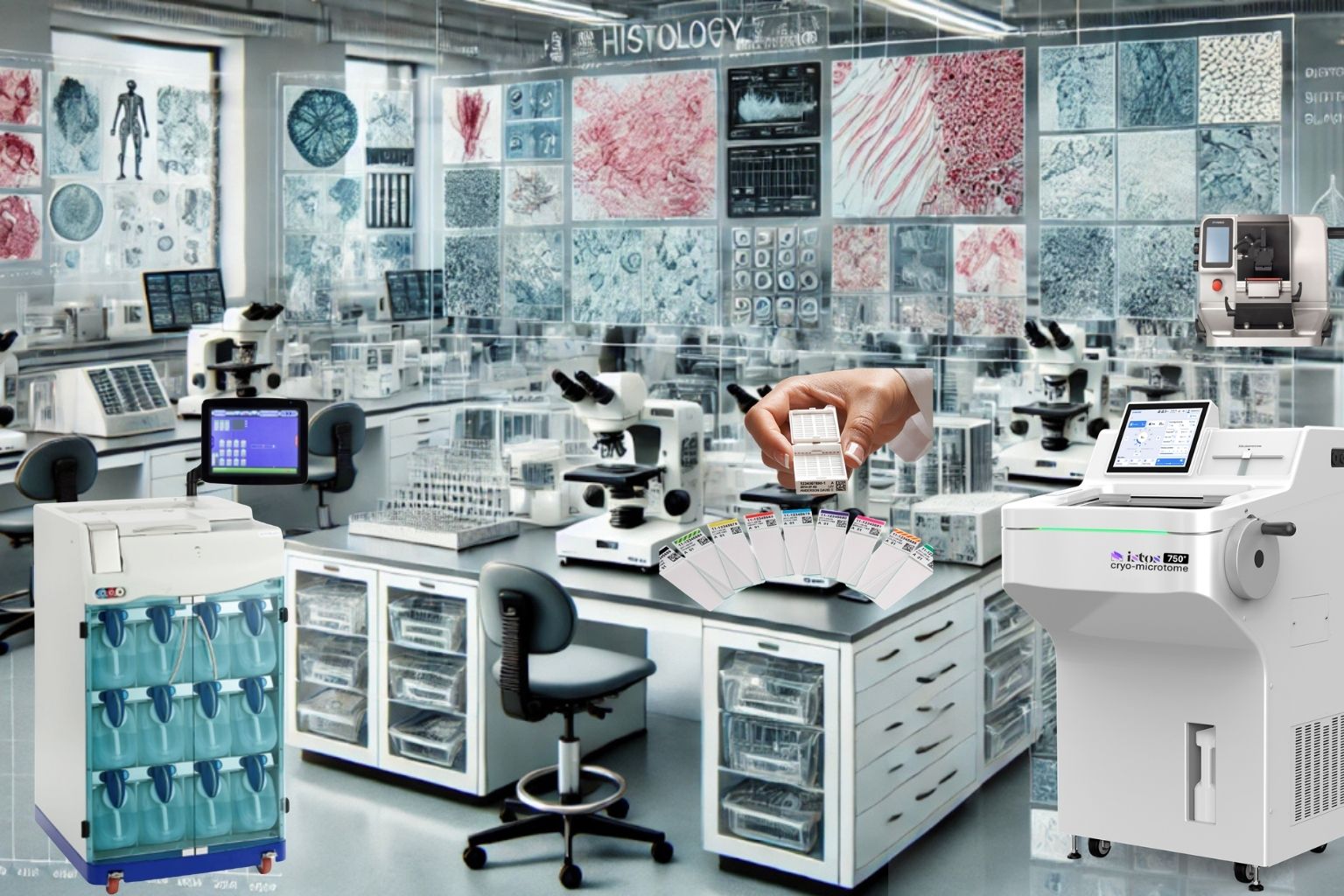
Why ergonomics is the missing piece in histology excellence
Histopathology is a craft built on precision. Every step—from specimen grossing to slide staining—must be performed with exacting care, under time pressure, and often for hours a day. Yet, while the science of histology is widely understood, the human factor is sometimes overlooked.
When equipment is not designed for comfort, when workstations force awkward postures, and when repetitive tasks strain the body, the lab team pays the price. Fatigue, discomfort, and even long‑term musculoskeletal disorders can erode the quality of work, slow productivity, and increase the risk of errors.
At ISTOS Medical, we believe that true excellence in histopathology is only possible when the human side of the workflow is engineered for comfort and efficiency. Ergonomics is not just about chairs and tables; it is about designing equipment, workstations, and workflows that support the people who make diagnostics happen.
The ergonomic risks in a histology lab
Histology is a high‑frequency, repetitive discipline. Operators spend long periods holding tools, cutting, transferring, and manipulating small samples. Over time, these tasks can lead to:
- Wrist and hand fatigue from prolonged cutting and gripping
- Shoulder and neck strain from looking down or leaning forward
- Back pain from standing at incorrect heights or twisting repeatedly
- Eye strain from poor lighting or glare on microscopes and slides
- Stress and mental fatigue from working in uncomfortable conditions
These risks are not just personal—they affect workflow. A fatigued, uncomfortable operator is slower, more prone to error, and more likely to take breaks away from the bench, which can delay case processing and slow down the entire lab.
From risk to solution: where ergonomics enters the workflow
The histology workflow is a chain of linked stages: grossing, processing, embedding, microtomy, staining, and cryostat sectioning. Each stage has its own ergonomic challenges, and each stage has the opportunity for improvement through better equipment design.
ISTOS Medical’s product range is built around this idea: every piece of equipment should support the human operator while maintaining diagnostic precision. Let’s walk through the workflow and see where ergonomics can be deliberately improved.
Ergonomics across the histology workflow
1. Grossing: the foundation of ergonomic workflow
Grossing is often the first step in histopathology, where tissues are examined, trimmed, and selected for further processing. It is also one of the most physically demanding stages. Operators spend long minutes cutting, holding instruments, and leaning over trays.
Poorly designed grossing areas can lead to:
- Back and shoulder strain from leaning over trays
- Wrist fatigue from repetitive knife use
- Repetitive twisting to reach sinks or tools
ISTOS Medical’s **Grossing Solution** is designed to change this. Modern grossing stations feature adjustable work surfaces, integrated sinks, and ergonomic layouts that keep tools and specimens within a comfortable reach. By reducing the need to twist, lean, or overreach, these stations help staff maintain a neutral posture and reduce long‑term strain.
Learn more about ergonomic grossing at: → Grossing Solutions
2. Processing: reducing manual handling with automation
Tissue processing involves embedding specimens in media, often with manual transfers and repeated loading of cassettes. This repetitive work can strain the hands and wrists, and exposure to chemicals can add to the physical burden.
Automated tissue processors reduce the need for manual handling and chemical exposure, allowing staff to focus on quality control rather than repetitive loading.
ISTOS Medical’s **Processing Solutions** are engineered to deliver consistent, high‑quality results while minimising the physical workload. Automated systems reduce repetitive transfers, streamline workflow, and help maintain consistent timing across batches.
Explore automated tissue processing at: → Processing Solutions
3. Embedding: precision without strain
Embedding is a delicate task that requires placing tissue accurately into cassettes and melting wax at controlled temperatures. It is often performed under hot conditions, with repeated hand movements.
ISTOS Medical’s **Embedding Systems** are designed to keep the workspace efficient and ergonomic:
- Controlled temperature zones reduce heat exposure
- Integrated layouts minimise reaching and twisting
- Smooth workflows reduce repetitive hand movements
Learn more about ergonomic embedding at: → Embedding Systems
4. Microtomy: cutting comfortably for hours
Microtomy is one of the most repetitive and physically demanding tasks in histology. Operators often hold blades for long periods, cut at awkward angles, and maintain fixed postures for extended sessions. Over time, this can lead to wrist, shoulder, and back pain.
ISTOS Medical’s **Rotary Microtomes** are built with ergonomic design principles:
- Blade and handpiece designs that support neutral wrist positions
- Adjustable heights to match the operator’s posture
- Precision controls that reduce the force needed for cutting
By reducing the physical effort required for cutting and allowing better alignment with the body, these microtomes help improve comfort and section quality.
Explore ergonomic microtomy at: → Rotary Microtomes
5. Staining and coverslipping: reducing manual repetition
Manual staining and coverslipping involve repeated dipping, lifting, and moving of slides. These tasks can strain the hands and wrists, and constant exposure to chemicals can add to worker discomfort.
Automated stainers and coverslipper systems reduce the need for manual handling, allowing staff to focus on quality and review rather than repetitive motion.
ISTOS Medical’s **Stainers and Coverslipper** solutions are designed to:
- Standardise staining and reduce variability
- Reduce repetitive hand movements
- Lower chemical exposure for staff
Discover automated staining solutions at: → Stainers and Coverslipper
6. Cryostat sectioning: working comfortably in the cold
Cryostat work is performed in cold environments, often requiring repetitive cutting under pressure. The combination of cold, repetitive motion, and prolonged postures can strain the body and reduce comfort.
ISTOS Medical’s **Cryostat Solutions** are designed to:
- Maintain consistent temperature and stability
- Provide ergonomic controls and blade positioning
- Support rapid frozen section workflows with minimal strain
Learn more about ergonomic cryostat sectioning at: → Cryostat Solutions
The bigger picture: why ergonomics matters for the lab
Ergonomics is not just about individual comfort; it is about the overall performance and sustainability of the lab.
When staff are supported by ergonomic equipment:
- They can work for longer periods without fatigue
- They are less prone to errors caused by discomfort
- They are more consistent in their technique
- They take fewer breaks away from the bench
- They are more likely to stay in the lab long term
In short, ergonomics improves diagnostic consistency, operational efficiency, and workplace satisfaction.
Conclusion: building a lab that works for people as well as samples
Histopathology is a field of precision, but precision is only possible when the human operator is comfortable, supported, and protected from strain. By integrating ergonomic design into every stage of the workflow—from grossing to cryostat sectioning—labs can protect their staff while improving their output.
ISTOS Medical is committed to providing histopathology solutions that combine diagnostic excellence with human comfort. From grossing stations to cryostats, our equipment is designed to reduce strain, improve workflow, and support the long‑term health of lab teams.
Contact ISTOS Medical at +91 80 2686 0607, +91 99001 98668, or email talktous@istos.in to discuss ergonomic solutions for your lab.