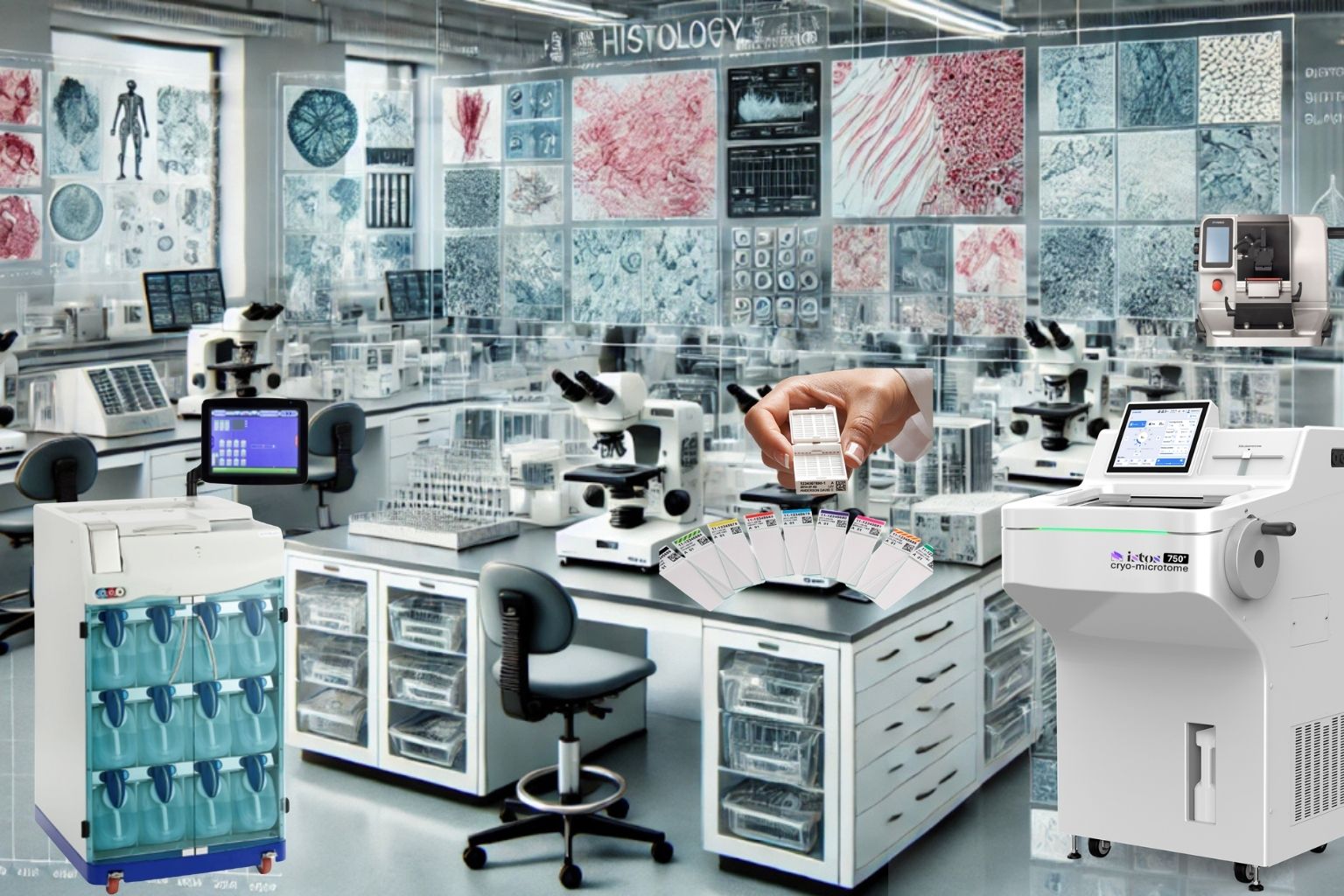
Introduction
Designing a histopathology laboratory involves far more than selecting equipment. A successful laboratory requires careful planning of workflow, specimen movement, staffing requirements, biosafety measures, automation levels, digital pathology readiness and future growth expectations.
Whether you are establishing a new pathology department, expanding an existing diagnostic facility, building a cancer center, or planning a medical college laboratory, asking the right questions during the planning stage can save significant costs and operational challenges later.
Q1. What Is The Expected Daily Specimen Volume?
The number of specimens received each day influences almost every equipment decision within the laboratory.
- How many specimens arrive daily?
- How many tissue cassettes will be processed?
- How many slides are expected each day?
- Will volume increase over the next five years?
Q2. Which Histopathology Services Will Be Offered?
Every laboratory has different diagnostic objectives and service offerings.
| Service | Additional Requirements |
|---|---|
| Routine Histopathology | Core workflow equipment |
| Frozen Section | Cryostat system |
| Immunohistochemistry | IHC workflow integration |
| Digital Pathology | Slide scanning infrastructure |
| Research Applications | Advanced workflow planning |
Q3. How Should The Histopathology Workflow Be Designed?
Workflow design directly impacts productivity, turnaround time and specimen safety.
Specimen Receipt → Grossing → Tissue Processing → Embedding → Microtomy → Staining → Coverslipping → Reporting → Archiving
Q4. How Many Grossing Stations Are Required?
Grossing is often the first major bottleneck in pathology laboratories. Capacity planning should account for pathologists, technicians, specimen complexity and future growth.
Q5. Which Tissue Processor Best Matches The Laboratory Workload?
Tissue processors form the backbone of specimen preparation. Laboratories should evaluate processing capacity, reagent management, cycle flexibility and emergency processing requirements.
Q6. What Type Of Embedding System Is Required?
Embedding quality influences downstream sectioning performance. Laboratories should consider paraffin dispensing consistency, ergonomics and throughput requirements.
Q7. Which Microtome Configuration Is Most Suitable?
| Type | Best For |
|---|---|
| Manual Rotary Microtome | Routine laboratories |
| Semi-Automated Microtome | Medium-volume facilities |
| Fully Automated Microtome | High-throughput laboratories |
Q8. Will Frozen Section Diagnostics Be Performed?
Hospitals supporting oncology surgery programs frequently require frozen section capability. Cryostat selection should consider throughput, temperature stability and section quality requirements.
Q9. Should Slide Staining Be Automated?
Automated staining systems improve consistency, reduce manual handling, support standardization and increase laboratory productivity.
Q10. Is Digital Pathology Part Of The Long-Term Strategy?
Digital pathology continues to transform pathology workflows through remote consultation, slide sharing, education and AI-assisted analysis.
Essential Histopathology Equipment Checklist
- Grossing Stations
- Tissue Processors
- Embedding Systems
- Rotary Microtomes
- Flotation Water Baths
- Slide Drying Systems
- Automated Stainers
- Coverslippers
- Cryostats
- Laboratory Storage Systems
- Digital Pathology Infrastructure
Common Mistakes During Histopathology Laboratory Planning
- Underestimating future specimen growth.
- Ignoring workflow optimization.
- Selecting equipment based solely on price.
- Insufficient laboratory storage planning.
- Neglecting digital pathology readiness.
- Poor biosafety and ventilation planning.
- Failure to consider service accessibility.
Conclusion
Successful histopathology laboratories are built through careful planning, efficient workflow design and strategic equipment selection. By evaluating specimen volumes, automation requirements, staffing needs, digital pathology goals and future expansion plans, laboratories can create a diagnostic environment that delivers reliability, efficiency and long-term value.
 Supporting Modern Histopathology Laboratories